The Economic Research Institute’s contribution to the development of Kazakhstan’s cooperation with the United Nations
23.10.2026
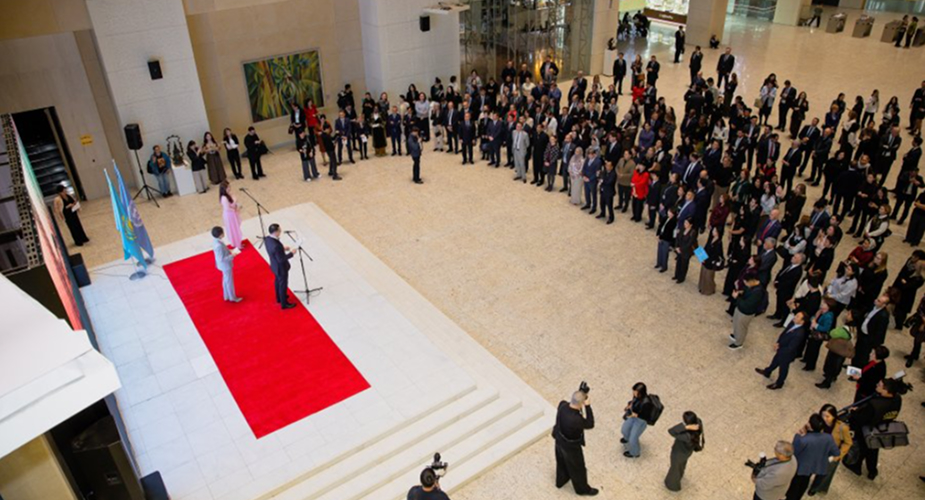 Ahead of United Nations Day, on 21 October 2026, the United Nations (UN) in Kazakhstan, in collaboration with the National Museum of the Republic of Kazakhstan, opened the exhibition “GLOCAL: Global Goals. Local Lives”, dedicated to the contribution of citizens in achieving the Sustainable Development Goals (SDGs). The exhibition presents 30 stories of people living in Kazakhstan whose initiatives are fostering the development of local communities in the environmental, educational, healthcare and social inclusion areas. Kazakhstan has been a member of the United Nations since 1992. Organisations within the UN system make a significant contribution to addressing strategic priorities and achieving the SDGs in Kazakhstan. Within the national SDG framework, the Economic Research Institute JSC (Institute) acts as the SDG Secretariat. Since the launch of the SDGs in Kazakhstan, the Institute has been actively cooperating with the UN Country Team, conducting joint research and providing the scientific and analytical basis for the development of national policy on the implementation of the 2030 Agenda.
In 2018, along with the United Nations Development Programme (UNDP), the integration of the SDGs into Kazakhstan’s strategic documents was comprehensively assessed. In 2019, the project aimed at establishing National SDG Platform was implemented to strengthen the implementation mechanisms and cooperation amongst stakeholders of the 2030 Agenda. Between 2020 and 2022, the Institute conducted a number of research projects in collaboration with the UN agencies. In partnership with UNDP, the research on development financing, SDG budget labelling, climate finance and the development of the SDG Financing Strategy in Kazakhstan was conducted.
Together with the United Nations Economic and Social Commission for Asia and the Pacific (ESCAP) and UNESCO, the methodology for estimating the cost of achieving SDG 4.2 ensuring access to quality pre-primary education has been developed. With ESCAP’s support, the research on the development of the strategy for financing small and medium-sized enterprises aligned with the SDGs was carried out. As part of the preparations for the second Voluntary National Review (VNR), the art-installations dedicated to all 17 SDGs was als.organised in collaboration with UNDP.
During the same period, the Institute, in collaboration with the Committee for Children Rights Protection of the Ministry of Education of the Republic of Kazakhstan and with technical support from UNICEF, participated in the development of the methodology for the Child Well-being Index and approaches to child-centred budgeting. More than 18,000 people participated in the stakeholder engagement process. In 2022, the Index methodology was approved at the national level.
Between 2023 and 2025, the Institute contributed to the UNDP project, funded by the European Union, establishing the regional SDG Platform for Central Asia. The Platform brought together statistical data, analytical materials and monitoring tools to facilitate regional cooperation. The UN Country Team, including the UN Resident Coordinator Office and agencies (UNDP, UN Women, UNICEF, ESCAP, FAO, UNFPA, the UN Volunteers programme and others), provided significant methodological and technical support in the preparation of Kazakhstan’s three Voluntary National Reviews (VNRs) on the implementation of the 2030 Agenda for Sustainable Development. Particular recognition should be given to UNDP’s support in the preparation and presentation of Kazakhstan’s Voluntary National Reviews at the UN High-level Political Forum (HLPF) on Sustainable Development. For reference In 2019, the first Kazakhstan VNR was prepared, with more than 200 experts contributing to its development. The VNR outlined the development of the institutional framework for implementing the SDGs in Kazakhstan. In 2022, the second Kazakhstan VNR was presented at the HLPF. As part of the VNR preparation, consultations were held in 17 regions, involving over 2,500 people. The VNR included the progress assessment results towards achieving the SDGs, as well as research on their financing and integration into the national planning system.
In 2025, the third Kazakhstan VNR was presented at the HLPF. In collaboration with UNICEF, the online survey of young people was conducted, reaching around In 2026, the Institute, in collaboration with the UN Resident Coordinator Office.organised round-table discussions on “The Contribution of Higher Education Institutions to the Implementation of the Sustainable Development Goals” and “Civil Society and the SDGs: Accelerating Action Towards 2030”, as well as the foresight session on the long-term challenges and prospects for sustainable development in Kazakhstan, in partnership with Maqsut Narikbayev University. The events brought together representatives from government bodies, universities, NGOs and the expert community, and resulted in the development of practical recommendations on enhancing civil society’s contribution in achieving the strategic sustainable development goals. The Institute’s long-standing collaboration with the UN Country Team contributes to the development of national monitoring tools, methodologies, regional analytics and mechanisms for stakeholder engagement.
Views: 11 |
|
||||||||||||||||||||||||||||||||||||||||||||||||||||||||||||||||||||||||||||||||||||||||||||||||||||||||||||||||||||||||||||||||||||||||||||||||||||||||||||||||||||||||||||||||||||||||||||||||


|