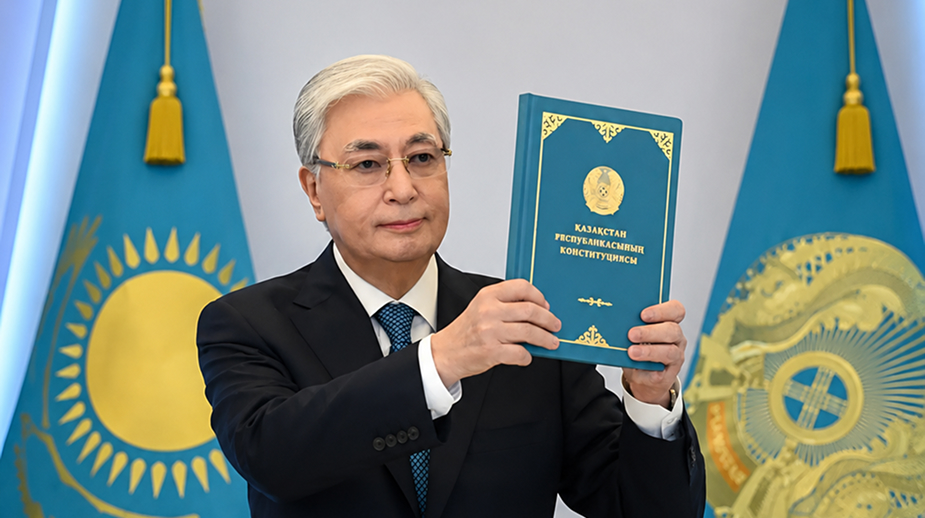
 Today, 1 July 2026, the new Constitution of the Republic of Kazakhstan entered into force. This is a truly historic milestone.
According
to Bakytgul Khambar, Director of the Secretariat for the
Sustainable Development Goals at the Economic Research Institute
JSC, the new Constitution not only modernizes the country's
political system but also lays the foundation for a new stage of
social, economic, and environmental development. In her view, it is a
landmark document that places the interests of the people at its
core, aligns with the principles of sustainable development, and
defines Kazakhstan's long-term development trajectory.
1.
The new Constitution entered into force on 1 July. In your opinion,
what role does this event play in Kazakhstan's political development,
and how would you assess its historical significance?
A
constitution is the cornerstone of any nation's development.
Therefore, I believe that 1 July 2026 marks the beginning of a
new chapter in Kazakhstan's history. The new Constitution can be
regarded as the foundation for advancing Kazakh society to a new
stage of development and as a document that combines the country's
historical traditions of governance with modern constitutional
principles.
For
example, the establishment of institutions such as the Kurultai
and the People's Council represents both an innovation and a
continuation of Kazakhstan's long-standing traditions of public
governance rooted in its history.
In
addition, Article 21 of the Constitution states: "The
right to privacy, personal and family confidentiality, as well as the
right to protection against the unlawful collection, processing,
storage, and use of personal data, including through the use of
digital technologies, shall be guaranteed by law."
This
provision demonstrates that Kazakhstan has established a solid legal
foundation for development in the era of digital technologies.
One
of the Constitution's key features is the recognition of the people
as the supreme source of sovereignty. Article 4 stipulates
that the people of Kazakhstan are the bearers of sovereignty.
This provision can also be viewed as the beginning of a new
historical stage in the country's political development.
2.
The constitutional reform involved a working group, the
Constitutional Commission, public consultations, and a nationwide
referendum. How do you assess the openness of this process and the
level of public participation?
The
effectiveness and longevity of any constitutional document largely
depend on the extent to which public interests are taken into account
during its development.
One
of the defining features of the drafting process was its broad public
consultation. This fully reflects the Sustainable Development
principle of "leaving no one behind."
Because
the discussions were open, public opinion included both support for
the draft Constitution and constructive criticism. Naturally, it was
neither possible nor necessary to incorporate every proposal into the
final text. Nevertheless, the working group and the experts involved
in the public outreach process made every effort to provide
comprehensive answers to citizens' questions.
As
a result, Kazakhstan has adopted a document that will serve as the
foundation for the country's future development. The next task for
both the state and society is to ensure the full and effective
implementation of the Constitution.
3.
How do you think the Constitution's key innovations will influence
public administration, the protection of citizens' rights, and
Kazakhstan's future development?
One
of the Constitution's most significant innovations is that it
integrates not only political provisions but also social, economic,
and environmental principles. This approach is fully consistent with
contemporary global development strategies and provides a strong
foundation for sustainable development.
For
this reason, I believe Kazakhstan is entering a new phase of
sustainable development, as repeatedly emphasized by the President.
International experience has shown that only a state with a strong
legal foundation for sustainable development can achieve long-term
prosperity and build a resilient and competitive economy.
Ultimately,
the success of these reforms will depend on how consistently and
effectively the provisions of the new Constitution are implemented.